
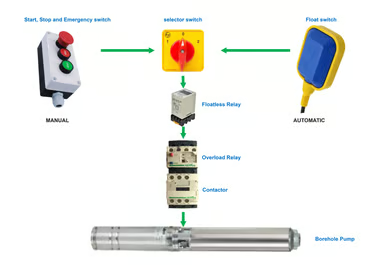
Borehole pumps are widely used to supply water for homes, farms, apartments, and industrial facilities. Because these pumps are usually installed deep underground, they must be protected from electrical faults and dry running. Without proper control, a borehole pump can easily be damaged by overload, phase failure, or running without water.
A reliable borehole pump control system combines motor protection devices and water level control devices to ensure the pump operates safely and efficiently.
In this guide, we will explain how to control a three-phase borehole pump using a Direct Online (DOL) starter, a floatless relay, and float switches. The system allows the pump to operate in two modes:
-
Manual Mode – The operator starts and stops the pump using push buttons.
-
Automatic Mode – The pump runs automatically based on the water level in the storage tank.
This design protects the pump from dry running, motor overload, and phase failure, while also preventing the tank from overflowing.
Main Components of a Borehole Pump Control System
A typical borehole control system consists of several electrical components that work together to control and protect the pump motor.
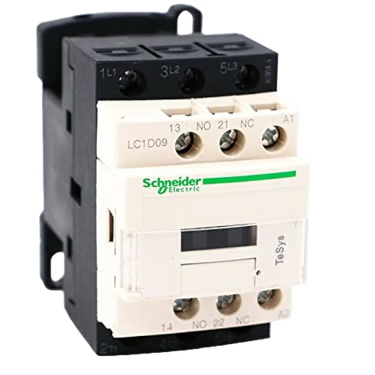
contactor
Switches power to the pump motor
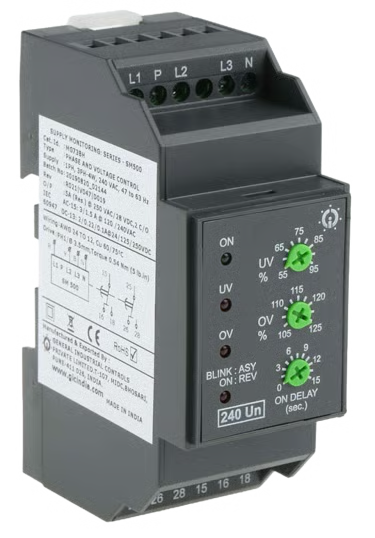
Phase Failure
Protects the motor if one phase is lost
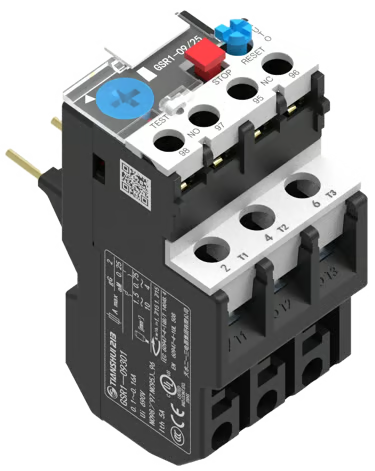
Overload Relay
Protects the motor from overheating due to excessive current
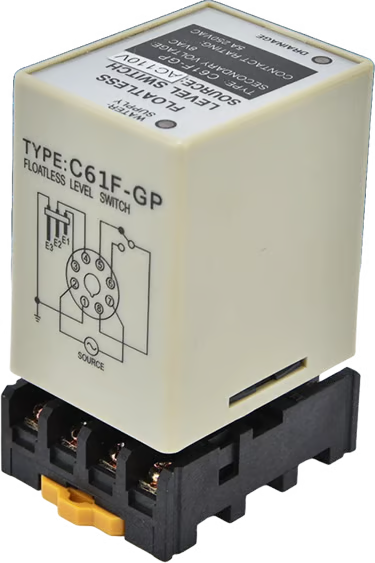
Floatless Relay
Detects water level in the borehole and protects the pump from running dry
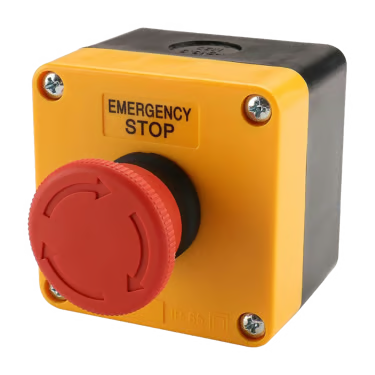
Emergency switch
Operated by humans, it protects the pump circuit, system against any electrical hazard
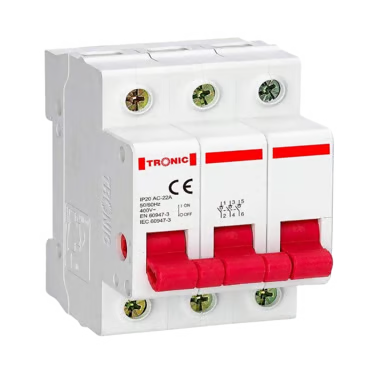
3Pole MCB
Protects the system from short circuits
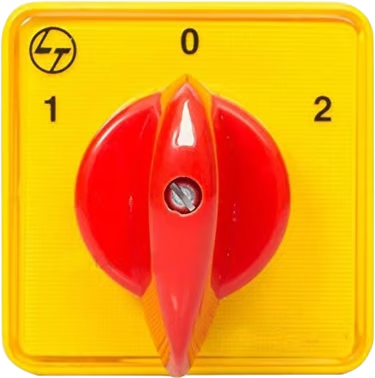
Selector switch
Selects Manual or Automatic mode
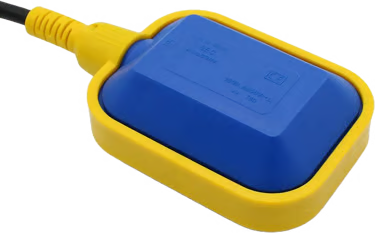
Float switch
Detects water level in the storage tank and control the pump as required
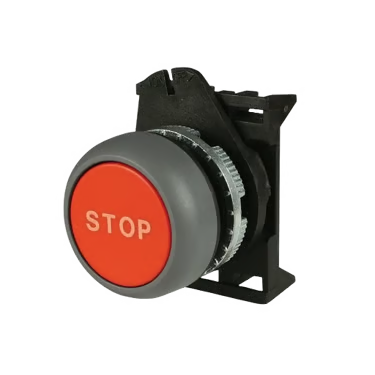
Stop Push Button(NC)
Stops the pump manually
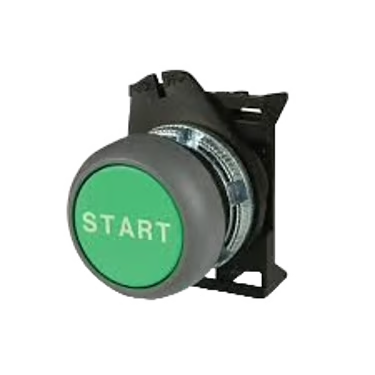
Start Push Button(NO)
Start the pump manually
Each of these components plays an important role in ensuring the pump operates safely and reliably.
Understanding the Floatless Relay
A floatless relay is an electronic water level controller that works with electrodes instead of mechanical floats.
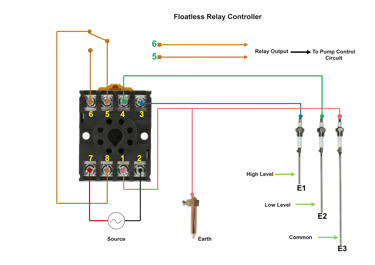
Unlike traditional float switches, which move physically with the water level, a floatless relay detects water using conductive probes placed inside the borehole or tank. See Figure 1 below
When water touches the electrode probes, a small electrical signal flows through the water, allowing the relay to detect the water level. The relay then activates or deactivates the pump accordingly.
Advantages of a Floatless Relay
-
No moving mechanical parts
-
Highly reliable
-
Suitable for deep wells and boreholes
-
Prevents dry running of pumps
-
Requires very little maintenance
In borehole systems, the floatless relay is typically used to detect low water levels in the borehole, preventing the pump from running when there is no water.
Figure 1
Borehole Dry-Run Protection Using a Floatless Relay
One of the most important protections in a borehole system is dry-run protection.
If the water level in the borehole drops too low, the pump can run without water, which can quickly damage the pump motor and mechanical seals.
The floatless relay prevents this problem.
Electrodes installed inside the borehole detect the water level. If the water level falls below the minimum electrode:
The floatless relay changes state
The control circuit opens
The pump immediately stops
Once the borehole water level rises again and touches the electrode, the system allows the pump to operate normally.
Borehole Pump Power and Control Circuit
Figure 2
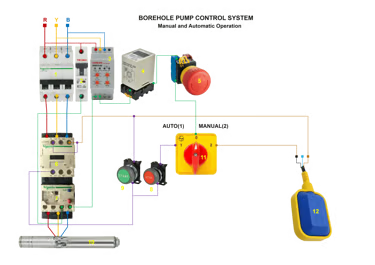
Borehole Pump Control Modes
The control system can operate in two different modes: Manual Mode and Automatic Mode.
Manual Mode Operation
In manual mode, the operator controls the pump using Start and Stop push buttons. See figure 2 above
When the Start button is pressed, the contactor coil energizes and closes the main contacts, allowing power to flow to the pump motor.
A normally open auxiliary contact from the contactor is used to create a self-latching circuit. This means the pump continues running even after the start button is released.
To stop the pump, the operator presses the Stop button, which breaks the control circuit and de-energises the contactor.
Manual mode is useful during:
System testing
Maintenance
Emergency operation
Automatic Mode Operation
In automatic mode, the pump operates based on the water level in the storage tank.
This mode uses float switches installed in the tank to control the pump automatically.
Typical Automatic Operation
When the water level in the tank drops to a low level, the float switch activates.
The control circuit energizes the contactor.
The pump starts and begins filling the tank.
When the water reaches the high level, the upper float switch opens the circuit.
The contactor de-energises, and the pump stops.
This automatic system ensures that the tank is always filled while preventing overflow.
Conclusion
Controlling a borehole pump properly is essential for reliable water supply and long pump life. By combining a Direct Online starter, float switches, and a floatless relay, it is possible to create a safe and efficient borehole control system.
Manual mode allows the operator to control the pump when necessary, while automatic mode ensures the tank is filled automatically. The floatless relay provides critical protection against dry running, preventing costly pump damage.
With proper design and installation, this control system can provide years of reliable operation for homes, farms, and industrial water supply systems.